
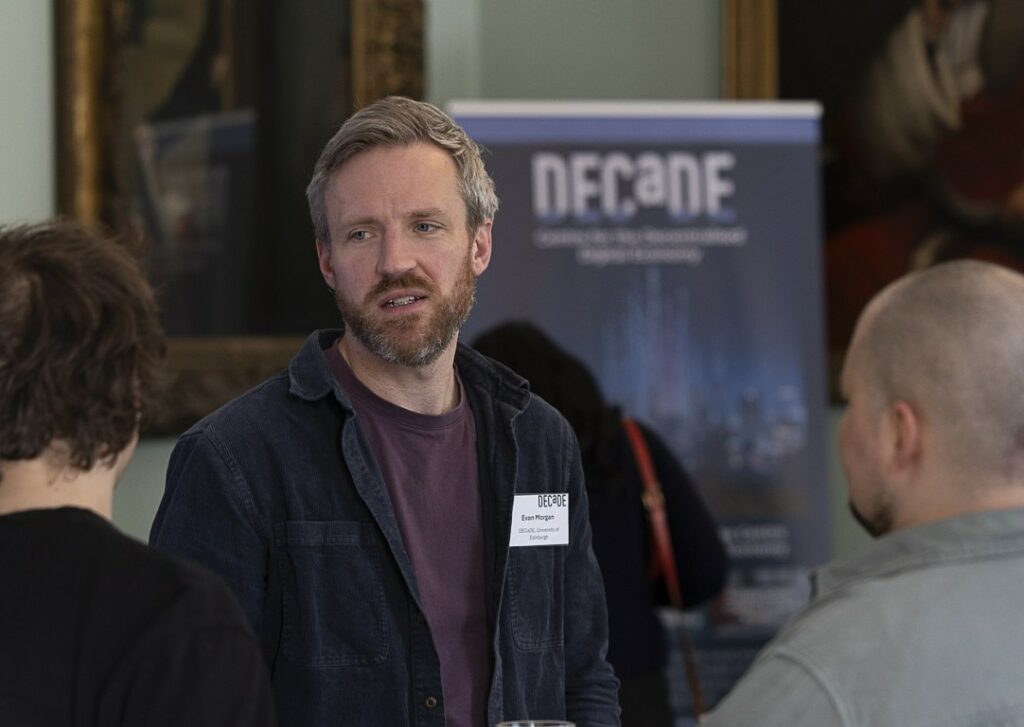
Dr Evan Morgan is a Research Software Engineer at the Institute for Design Informatics (IDI) at the University of Edinburgh. He supports the DECaDE centre through creative design and application of data driven technologies.
What is your role in DECaDE?
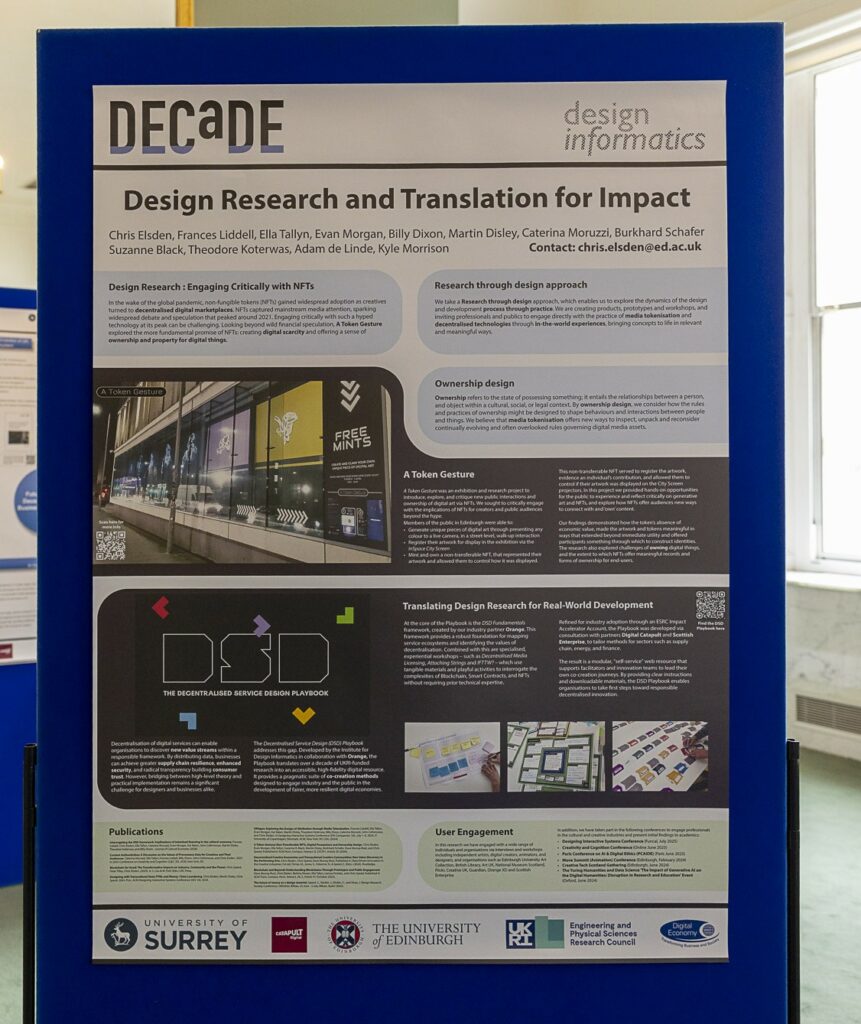
As a research software engineer, I support the DECaDE research team at the University of Edinburgh in designing and developing the software (and occasionally hardware) prototypes used in our research. For example, I helped create Token Gesture – an interactive exhibit that allowed passers-by to customise a generative artwork and then claim a digital copy of it as a non-fungible token (NFT).
What is your area of research?
Here at Institute for Design Informatics we explore how people interact with new and emerging technologies – and I’m particularly interested in how technologies can impact human behaviour and vice versa.
What attracted you working on the DECaDE project?
I’d already been working with blockchain and decentralised ledger technologies (DLTs) and had both an interest in – and a healthy scepticism about – their utility in the real world. I was especially interested in how blockchain was facilitating a surge in the popularity of generative art (art created via code) through the trading of digital NFTs.
What excites you about the field you’re working in?
I enjoy the challenge of learning and designing with new technologies, and it’s exciting to get the opportunity to do this alongside researchers working at the cutting edge of their fields.
What problem have you been trying to solve within DECaDE?
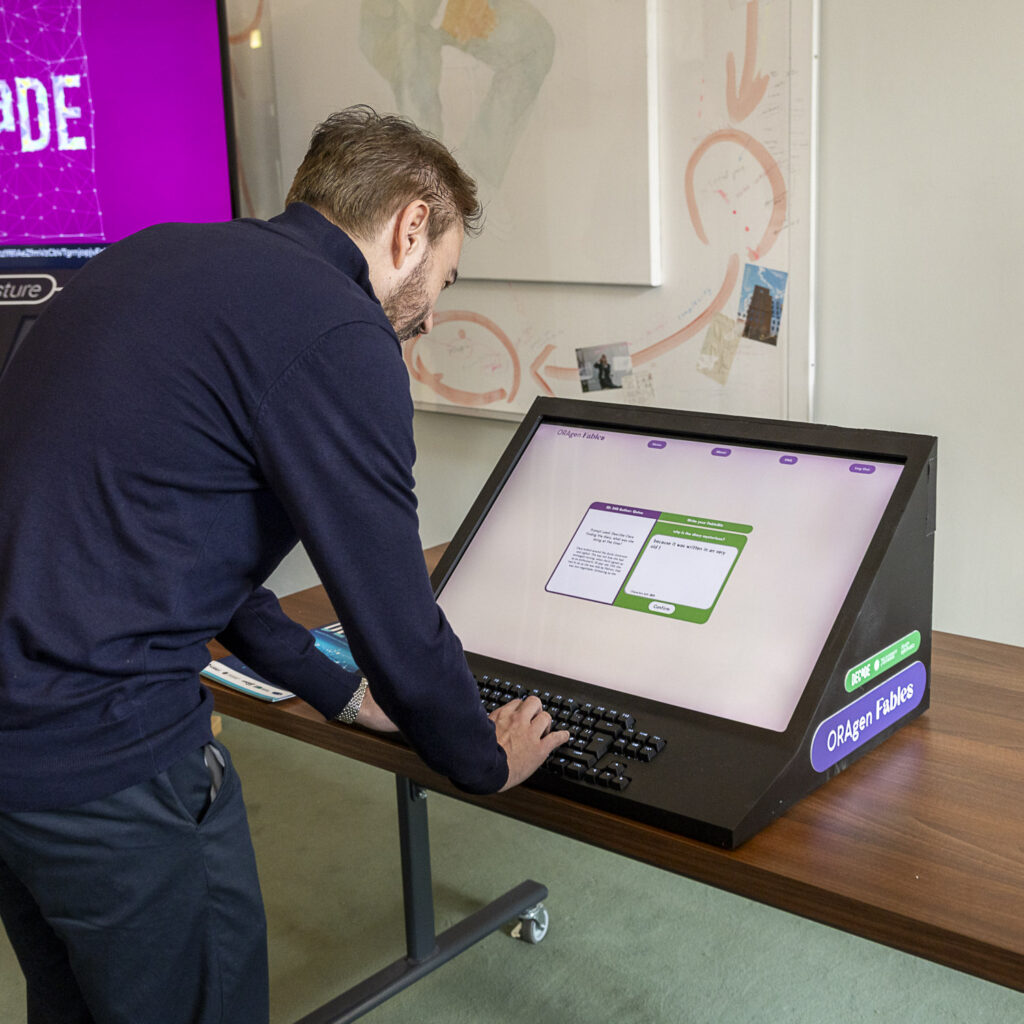
We’ve been investigating how to engage people with some of the complex themes and technologies that underlie ORA – a framework for the decentralised management of ownership, rights, and attribution relating to digital media. The problem is that, while people are familiar with these concepts in their everyday lives, things become far more complex when we consider what it might mean to implement and enforce these ideas in an increasingly murky digital landscape.
I understand your research interests are the use of technology to influence and improve human behaviour. How do you apply this interest to the DECaDE project?
I spent a lot of time working with musicians to investigate how technology might help us understand and enhance the non-verbal interactions that they rely on during live performances. This involved taking advanced technologies – physiological sensors, motion capture, and eye tracking – and placing them in the context of complex and nuanced human interactions.
What we’ve been doing in DECaDE isn’t dissimilar. We’ve taken technological solutions, but considered how they can improve inherently human interactions, such as those between an author and a publisher. For me, it’s about reframing technical solutions through a human-centred lens.
Tell me about a recent paper you have published and its impact?
I was proud to be a co-author on the paper – ORAgen Fables: Advancing the Design and Management of Content Attribution – which received an honourable mention at CHI ’26.
What is the biggest issue currently in the digital economy and how does your research assist DECaDE in addressing these challenges?
The rapid proliferation of generative AI content throughout the internet is by far the biggest issue for the digital economy right now, in my opinion. We’re crossing a threshold where generative AI content is no-longer distinguishable from human generated content. I sometimes imagine historians in the year 3000 marking 2026 as the year after which source material could no-longer be considered reliable – the truthpocalypse!
DECaDE is addressing this challenge by considering ways in which the provenance of digital content can be recorded and verified, so hopefully those future historians will thank us!
What is the future / next step for research into the decentralised digital economy?
I think there is important research to be done in understanding how we proliferate some of the solutions that DECaDE researchers have worked on over the last 5 years into wider adoption throughout society. This could involve integrating solutions into everyday hardware and software that people use, such as smartphones – which is already happening to some extent. But I think it comes back down to the importance of viewing technological capabilities through the lens of human experience.