
Content Supply Chains
Creating a Fairer Creative Economy
DECaDE researchers are developing new approaches that help creators retain greater control over how their work is used in AI systems. By supporting transparent consent, attribution and compensation, this research aims to build a more trustworthy and sustainable digital economy for creative content.
As creative works move across platforms, are remixed and transformed, and are increasingly used to train AI systems, creators often lack practical ways to signal consent and track how their content is used. DECaDE approaches this challenge as a supply chain problem, developing technologies that increase transparency and accountability across the lifecycle of digital content.Establishing the provenance of work not only enhances creative attribution, it conveys better agency over how work is re-used, and even opens the door to new licensing models and pathways for creators to generate value from the work in the age of generative AI.”
Research Highlights

Provenance as Infrastructure for the Creative Economy
As AI systems increasingly rely on creative content for training, creators need practical ways to signal consent, communicate usage rights and receive fair compensation when their work is reused. DECaDE researchers have explored how media provenance technologies can help address this challenge through transparent, machine-readable rights management.
DECaDE developed DECORAIT, the first decentralised registry for AI opt-in and opt-out signalling. Built using media provenance technologies and distributed ledger infrastructure, DECORAIT enabled creators to express consent preferences for AI training in a way that could be understood and acted upon at scale.
The team also developed the ORA (Ownership, Rights, Attribution) framework and the EKILA system, exploring how provenance technologies could support attribution and compensation when creative works contribute to AI-generated content.
Together, this research demonstrates how provenance can support a more transparent, accountable and equitable digital economy for creators in the age of AI.
Team: Kar Balan, Junaid Awan, Andrew Gilbert, John Collomosse

A Token Gesture: Exploring Digital Ownership Through NFTs
As NFTs gain mainstream attention, DECaDE researchers look beyond the hype to explore what digital ownership means in practice. The research examines the potential of NFTs to create a sense of ownership, participation and authorship in the digital economy, rather than focusing on their speculative financial value.
Using a Research through Design approach, the team develops A Token Gesture, a public generative art exhibition that enables participants to co-create digital artworks and mint NFTs in real time. Rather than acting as tradeable assets, the NFTs serve as non-transferable proofs of participation.
By bringing together artists, researchers and the public, the project encourages critical discussion about digital ownership, creative participation and the future design of decentralised digital economies.
Team: Evan Morgan, Martin Disley, Ella Tallyn, Suzanne Black, Burkhard Schafer, Chris Elsden
ORAgen: Evaluating Agency, Right and Attribution
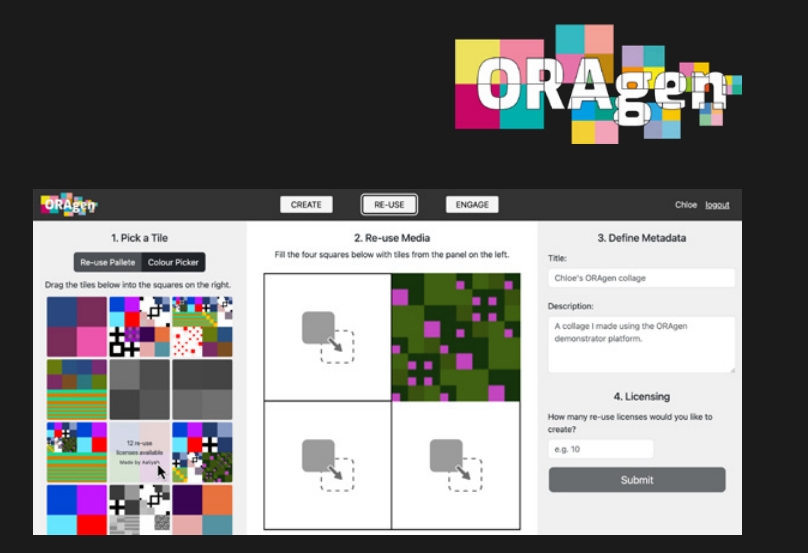
As generative AI transforms the creative industries, creators need better ways to manage ownership, rights and attribution for their work. DECaDE’s ORAgen project explores how media provenance and tokenisation technologies can help creators retain greater control over how their content is shared and reused.
Built on DECaDE’s ORA (Ownership, Rights and Attribution) framework, the ORAgen demonstrator enables creative professionals to explore new approaches to licensing and rights management through interactive workshops and hands-on activities. Insights from these engagements inform the ongoing development of the framework and the report ORAgen: Emerging Futures for Media Tokenization and Digital Media Rights.
The research demonstrates how provenance technologies can support fairer rights management, greater transparency and new opportunities for creators in an AI-enabled digital economy.
Team: Frances Liddell, Evan Morgan, Billy Dixon, Ella Tallyn, Kar Balan, Theodore Koterwas, Martin Disley, John Collomosse, Chris Elsden

Time to ACCCT: Access, Control, Consent, Compensation and Transparency
As AI training raises new questions around copyright and consent, DECaDE works with creators, policymakers and industry to explore fairer approaches to the reuse of creative content. In collaboration with the UKRI CoSTAR National Lab, the Time to ACCCT report examines how creators can retain greater control over how their work is accessed, licensed and reused by AI systems.
The research argues that creators need more than simple opt-in or opt-out mechanisms. Instead, DECaDE proposes media provenance as the foundation for communicating rights, consent, licensing terms and compensation in a transparent, machine-readable way.
Combining technical research with creator workshops and policy engagement, Time to ACCCT informs discussions on copyright and AI, demonstrating how provenance technologies can support a more transparent, accountable and equitable creative economy.